


News
Leather Industry Waterproofing, Anti-Mold and Antibacterial Solutions
Complete protection for footwear, handbags, furniture, automotive interiors and all leather products throughout the supply chain
Introduction: The Hidden Threat to Leather Products
Leather is one of the most valuable and versatile materials in manufacturing. Used in footwear, bags, furniture, automotive interiors, and countless other products, leather combines durability, comfort, and aesthetic appeal that few materials can match.
However, leather has a critical vulnerability: it is an organic material. Its fibrous protein structure, composed primarily of collagen, along with natural fats and oils retained during the tanning process, provides an ideal breeding ground for mold and bacteria.
For manufacturers and exporters, this vulnerability translates into a persistent and costly business risk:
Entire shipments rejected at destination due to mold growth
Brand reputation damaged by contaminated products reaching consumers
Customer complaints and returns eroding profitability
Insurance claims denied as mold is considered a foreseeable risk
The scale of the problem is significant. According to estimates from multiple international insurance companies, moisture-related damage accounts for approximately 12% of all container shipping damage. Industry data suggests that for long-haul ocean voyages of 30 days or more — such as routes from China to Europe or South America — cargo damage rates for moisture-sensitive goods like leather can reach 15–20%.
Consider this: A single rejected shipment of 2,000 leather belts cost one trading company over 200,000 RMB in direct losses. For a mid-sized manufacturer shipping multiple containers per year, the cumulative cost of mold-related losses — including rejected shipments, customer returns, rework, and brand damage — can easily exceed 500,000 RMB annually.
Therefore, establishing a complete protection system throughout production, storage, packaging and transportation is important.
Why Leather Products Are Vulnerable to Mold
Understanding why leather is susceptible to mold is the first step toward effective prevention.
1. Natural Leather Characteristics
Leather is fundamentally different from synthetic materials. Natural leather is composed of:
Collagen fibers — the primary structural protein of animal hides
Proteins and amino acids — nutrients that fungi feed on
Natural fats and oils — retained from the tanning process
Moisture-absorbing structures — that retain water within the fiber matrix
These components make leather a perfect food source for mold spores. When temperature and humidity conditions are favorable, mold growth can begin within 24 to 48 hours.
Research shows that when leather products are in an environment with ambient temperature of 25–35°C and relative humidity of 75–95%, mold grows very easily.
2. Production and Storage Risks
During leather manufacturing, products face multiple mold risks:
High-humidity workshops — common in tropical and subtropical production regions
Long production cycles — increasing exposure time to potential contamination
Semi-finished product storage — often in suboptimal conditions
Warehouse moisture — particularly during monsoon seasons
Without proper protection, untreated leather goods can experience damage rates of up to 20% in monsoon conditions.
3. Transportation Humidity Risks
International shipment creates additional challenges that are often overlooked:
Long ocean transportation — typically 30–60 days for major trade routes
Closed container environment — with limited air circulation
Temperature fluctuations — causing condensation inside containers
Container rain — condensed water dripping from container ceilings onto cargo
"Container rain" is one of the most common causes of leather mold during shipment. When warm, humid air inside a container meets cold metal surfaces (such as the container roof that has cooled at night), water vapor condenses into droplets that fall directly onto leather products below.
Leather Industry Challenges & Admire Solutions
Admire Complete Leather Protection System
Admire China Anti-Mold Co., Ltd. provides a complete leather protection system covering:
Leather Material → Production → Finished Products → Packaging → Transportation
Our solutions include:
- Anti-mold protection
- Antibacterial treatment
- Moisture control
- Waterproof performance improvement
Solution 1: Anti-Mold & Antibacterial Treatment for Leather Production
Production processing is one of the most critical stages for leather protection. Professional anti-mold and antibacterial treatment during manufacturing helps reduce microbial risks and improve product storage stability.
Recommended Solution:
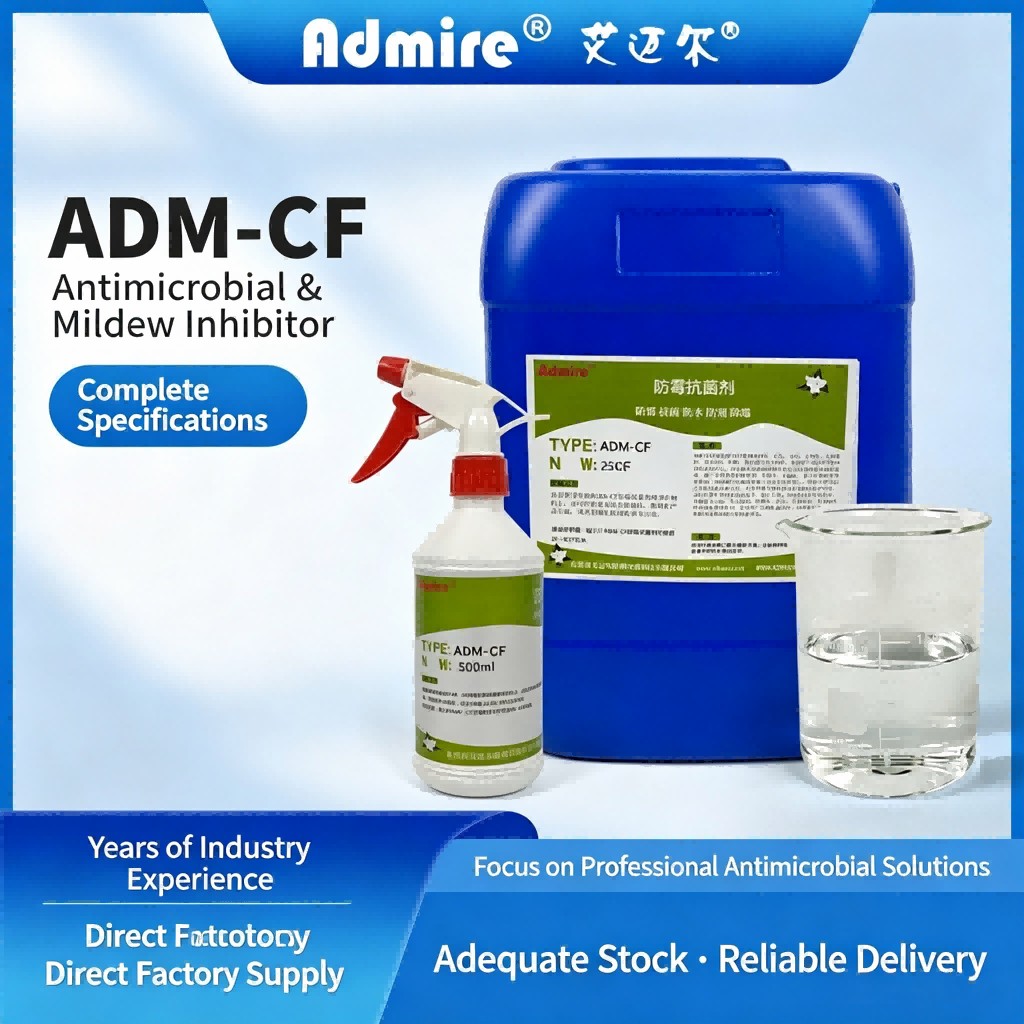
ADM-CF Anti-Mold & Antibacterial Agent
Product Highlights:
Provides broad-spectrum anti-mold and antibacterial protection against Aspergillus niger, Penicillium, yeast, Staphylococcus aureus, E. coli, and more
Treated textiles, leather, sponge, and wood can reach Grade 0 mold resistance (highest level, no mold growth observed)
Neutral water-based formula — does not cause yellowing, hardening, color fading, or embrittlement
Excellent penetration — penetrates fiber gaps, sponge pores, and leather inner layers for deep protection
Protection period of 6 to 18 months — long-lasting effectiveness
High efficiency — 1 kg covers 20–40 m² of material surface
Suitable Applications:
Leather processing
Footwear manufacturing
Leather goods production
Finished leather products
Solution 2: Surface Protection for Finished Leather
Some finished leather products require targeted protection for specific areas — particularly high-touch surfaces or areas prone to moisture exposure.
Recommended Solution:
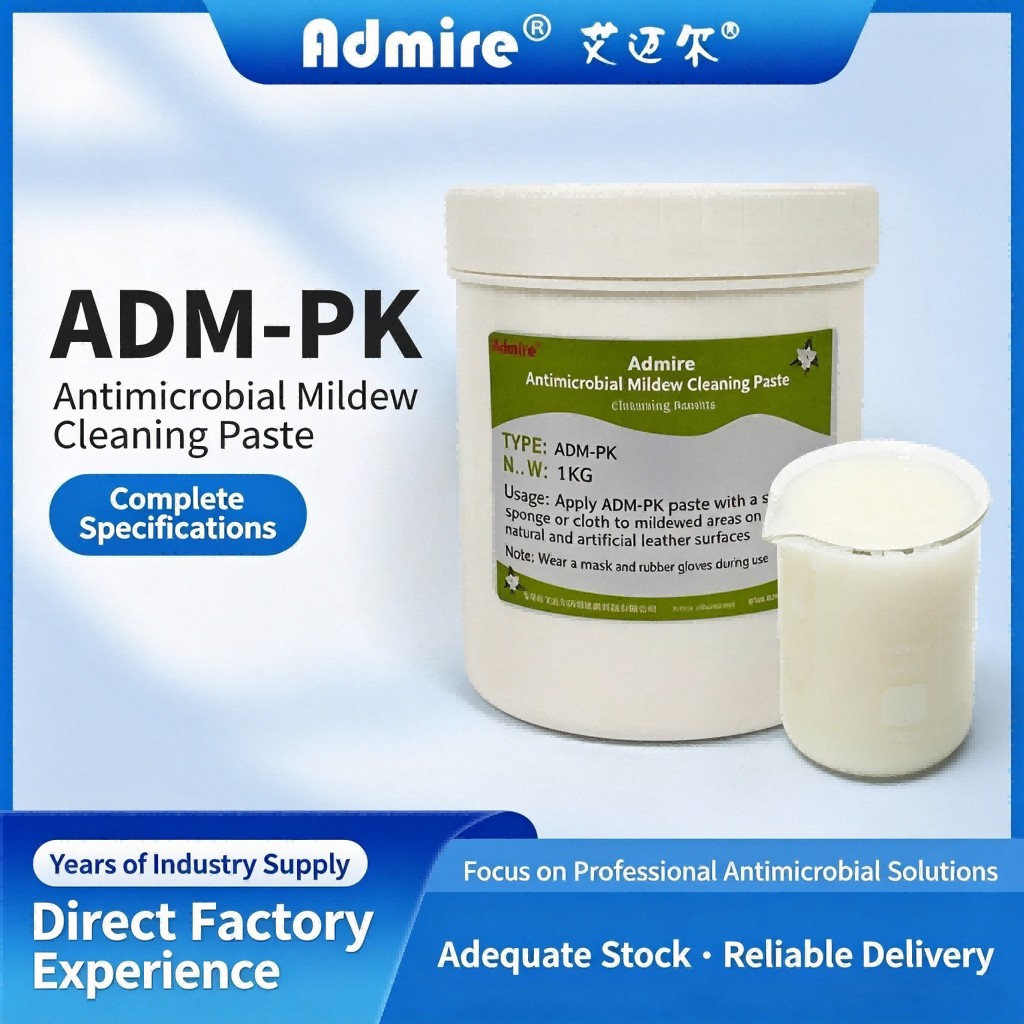
ADM-PK Anti-Mold Antibacterial Paste
Product Highlights:
Cleans existing mold stains on leather surfaces while eliminating mold spores embedded deep within the material
Prevents mold recurrence — treated surfaces remain mold-free for up to 280 days
Non-migrating and non-leaching — stays in place and is not consumed by microorganisms
Powerful cleaning action — removes dirt and mold without damaging the leather
Creamy white paste — easy to apply with a sponge or cloth to affected areas
Suitable Applications:
Leather goods (shoes, handbags, gloves, hats, belts, leather sofas, etc.)
Finished leather products requiring surface mold cleaning and protection
Solution 3: Moisture Control for Packaging & Shipping
Humidity management is essential during packaging, storage and international transportation. Even after production protection, leather products may still face moisture risks during shipment.
The Challenge:
During ocean freight, temperature fluctuations inside containers cause moisture to condense on cold metal surfaces. For a 30-day voyage, this condensation can create significant moisture accumulation, accelerating mold growth on unprotected leather goods.
Recommended Solution:
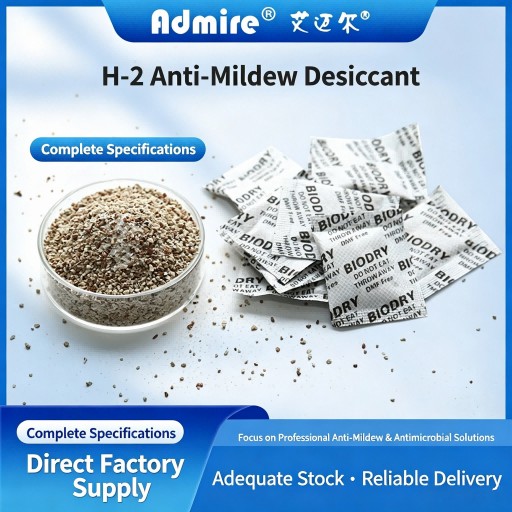
Product Highlights:
Superior adsorption capacity — 20 times the adsorption capacity of silica gel desiccants
Ultra-high saturation absorption rate — absorbs moisture up to 300% of its own weight (at 25°C, RH=100%)
Long-lasting moisture control — effective for 30 to 90 days
Integrated protection — contains antimicrobial agents, combining moisture control with mold and bacteria prevention
Eco-friendly — 100% naturally degradable
Third-party certified — tested by SIMT and SGS certified
Suitable Applications:
Export packaging
Shoe boxes and bag packaging
Container transportation
Warehouse storage
Solution 4: Waterproof Protection for Leather Materials
Water resistance is an important factor affecting leather durability and performance. Admire's fluorine-free waterproofing solution provides effective water protection without compromising leather's natural breathability or feel.
Recommended Solution:
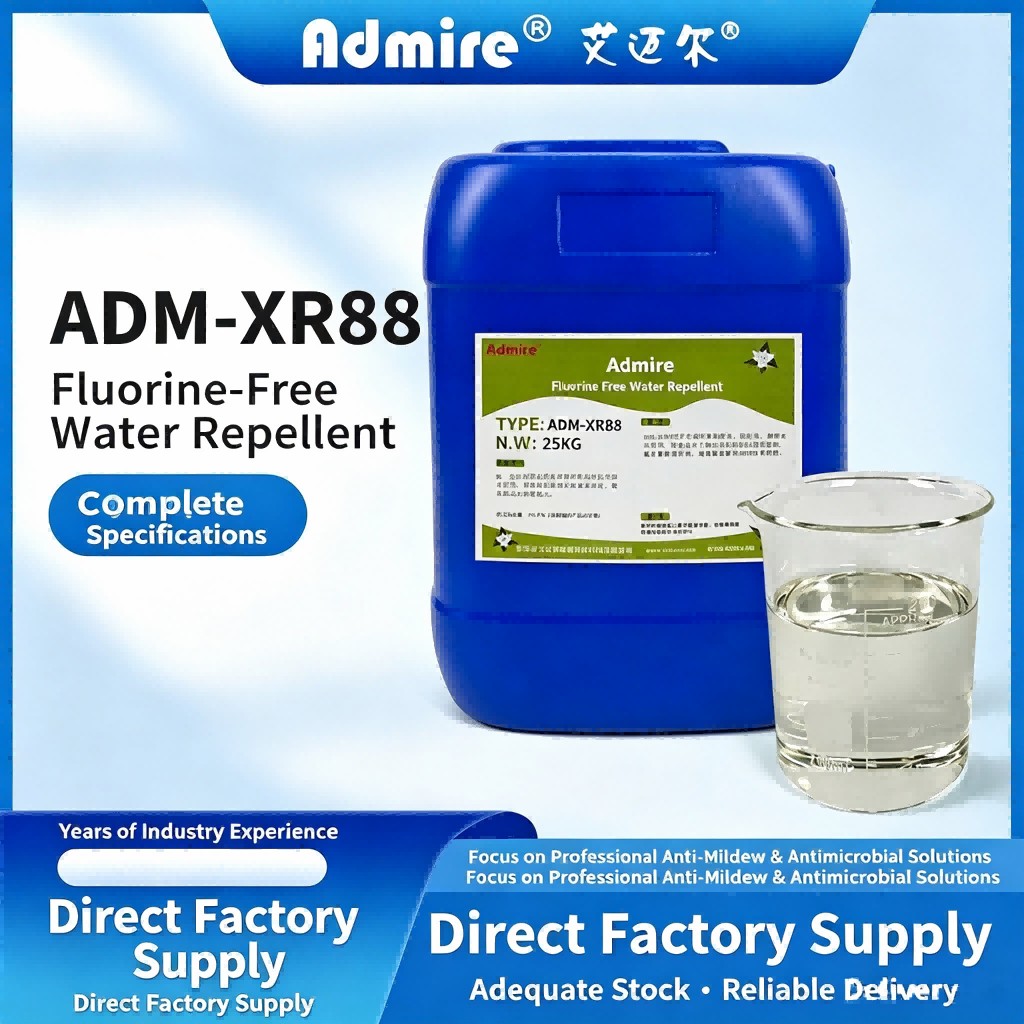
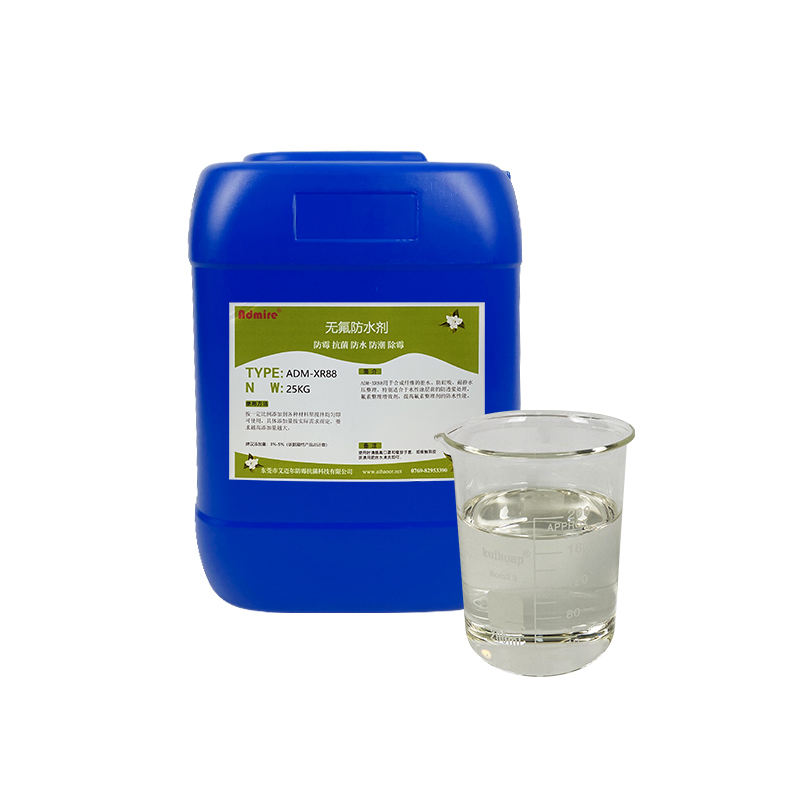
ADM-XR88 Fluorine-Free Waterproofing Agent
Product Highlights:
Fluorine-free and APEO-free — environmentally friendly formula
Excellent water repellency — provides waterproofing, anti-wicking, and hydrostatic pressure resistance for synthetic fibers
Anti-penetration treatment — particularly suitable for preventing penetration before water-based coating applications
Synergistic effect — can be used as a booster for fluorine-based waterproofing agents, significantly improving both initial water repellency and wash durability
Cost-effective — significantly reduces overall chemical costs
Versatile — exhibits excellent waterproofing performance whether used alone or in combination with other products
Process parameters: pH 4.0–5.0, drying at 110–130°C, curing at 150°C for 3–5 minutes
Suitable Applications:
Leather footwear
Leather bags
Premium leather products
Synthetic fiber materials requiring water repellency
Leather Industry Applications
1. Footwear Industry Anti-Mold Solution
Leather footwear manufacturers often face mold risks during production, storage and international transportation.
Common Challenges:
Mold growth on leather uppers and insoles
High humidity during warehouse storage
Long transportation periods (30–60 days)
Quality risks during export shipment
Recommended Protection Approach:
A complete footwear protection system includes:
Production anti-mold and antibacterial treatment with ADM-CF
Packaging moisture control with ADM-H2 desiccants
Waterproof performance enhancement with ADM-XR88
2. Leather Bags & Accessories Protection Solution
Leather bags and accessories usually require higher appearance protection standards, as surface defects are immediately visible to consumers.
Common Challenges:
Surface mold spots affecting appearance
Long-term inventory storage
Moisture exposure during transportation
Recommended Protection Approach:
Protection solutions include:
Surface anti-mold and antibacterial protection with ADM-PK
Moisture control in packaging with ADN-H2
Waterproof performance improvement with ADM-XR88
3. Leather Furniture Protection Solution
Leather furniture products often require long-term storage stability before delivery to retailers or customers.
Common Challenges:
Warehouse humidity during storage
Seasonal climate changes
Extended storage periods (weeks to months)
Recommended Protection Approach:
A complete solution includes:
Production anti-mold treatment with ADM-CF
Moisture management with ADM-H2
Waterproof protection with ADM-XR8
4. Automotive Leather Protection Solution
Automotive leather suppliers need stable quality throughout the entire supply chain, as automotive industry standards are particularly strict.
Common Challenges:
Long inventory periods (Just-in-Sequence requirements)
Humid transportation environments
Strict quality requirements from automotive manufacturers
Recommended Protection Approach:
A complete protection system helps improve:
Mold resistance
Moisture control
Product stability and consistency
Anti-Mold Desiccant H-2
Moisture-control solution designed for leather packaging and
Why Choose Admire?
Proven Track Record
ISO9001 certified
Over 1,000 customers across four continents
Products in over 30 countries
National association credit commitment enterprise
Complete Product System
Solutions covering every stage of the leather supply chain:
Raw material → Production → Finished products → Packaging → Transportation
Customized Solutions
Solutions tailored to:
Material characteristics
Production process
Storage conditions
Transportation environment
Technical Support
We provide:
Product selection guidance
Application recommendations
Solution optimization
Technical troubleshootin
Frequently Asked Questions
1. Why do leather products develop mold?
Leather is a natural material containing organic components such as collagen, proteins and natural oils.
When exposed to:
- High humidity
- Poor ventilation
- Long-term storage
- Moisture during transportation
mold may grow on leather surfaces and affect product appearance and quality.
Proper anti-mold treatment and moisture control can help reduce mold risks.
2. How can leather manufacturers prevent mold during production and storage?
Leather manufacturers can reduce mold risks by establishing a complete protection process, including:
- Maintaining suitable storage conditions
- Controlling production environment humidity
- Applying professional anti-mold treatment
- Using moisture-control protection during storage and shipment
For leather production applications:
3. Why do leather products become moldy during ocean shipment?
During international transportation, leather products are often stored in closed containers for long periods.
Common causes include:
- High humidity inside containers
- Temperature fluctuations
- Condensation
- Moisture accumulation inside packaging
Using proper packaging moisture-control solutions can help reduce mold risks during overseas shipment.
4. Can Admire provide customized leather anti-mold solutions?
Yes.
Admire China Anti-Mold Co., Ltd. provides customized solutions based on different leather materials, production processes and application environments.
Customers can provide information such as:
- Leather type
- Product application
- Storage conditions
- Transportation method
- Current mold problems
Based on these requirements, Admire can recommend a suitable protection solution.
5.Can Admire provide customized leather solutions?
Yes. Admire can provide customized protection solutions according to different leather materials, production processes and application requirements.
Looking for a professional leather anti-mold and protection solution?
Contact Admire China Anti-Mold Co., Ltd. for customized product recommendations and technical support.
Can't find what you're looking for ?
Leave a Message we will call you back quickly!
Professional Service
Interested? Leave your contact details.
Search Starts Here
